Perimenopause, Estrogen & Your Whole-Body Health: What Every Woman Should Know
By Dr. Andrea Jang | Jang Acupuncture & Functional Medicine | Moraga, California
Following an incredible evening of fun, laughter, connection, and honest conversation about perimenopause and hormone health, here are some of the biggest takeaways from our recent Perimenopause Wellness Dinner in Moraga.
Estrogen: A Whole-Body Hormone. Estrogen receptors are distributed throughout many tissues and organs, helping explain why changing estrogen levels during perimenopause and menopause can affect symptoms throughout the body.
Perimenopause isn’t simply about periods becoming irregular or eventually stopping. Changing hormone levels can affect many different systems throughout the body, which helps explain why the symptoms women experience during this transition can be so varied — and sometimes so confusing.
Perimenopause Is About More Than Hot Flashes
When most people think about menopause, they think about hot flashes.
But estrogen’s influence extends far beyond the reproductive system.
Estrogen receptors are found in tissues throughout the body. Estrogen plays a role in the brain and nervous system, cardiovascular system, muscles, bones, metabolism, reproductive and urinary tissues, skin, immune system and more.
As estrogen levels begin fluctuating during perimenopause, women may notice changes involving:
Sleep
Mood and anxiety
Memory and concentration
Menstrual cycles
Energy
Muscle strength and recovery
Bone health
Metabolism
Skin and hair
Vaginal and vulvar health
Bladder and urinary symptoms
Sexual health
Not every woman experiences the same symptoms, and not every symptom that occurs during perimenopause is necessarily caused by hormones. That’s one reason an individualized approach to women’s health during this stage of life is so important.
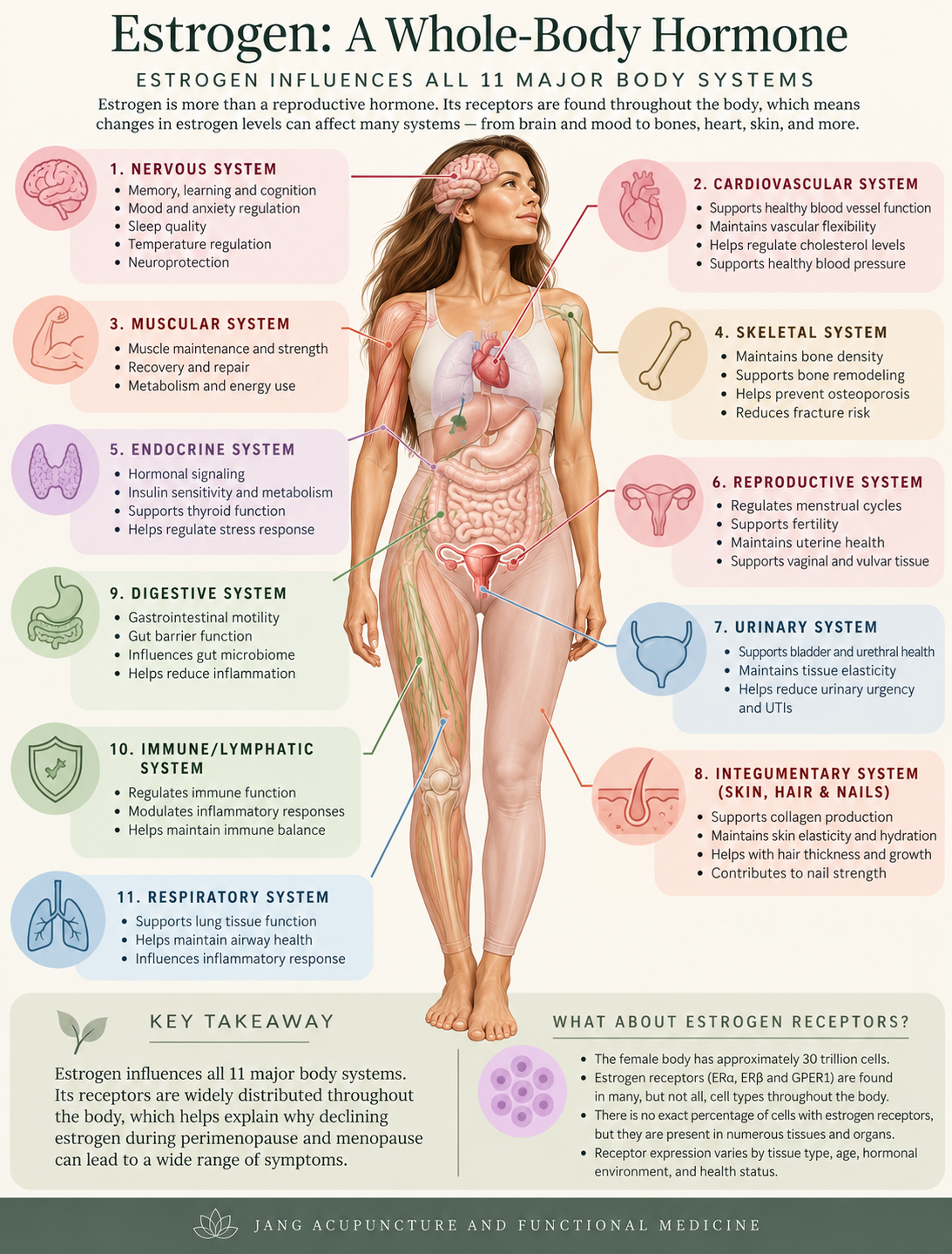
Estrogen is more than a reproductive hormone. Estrogen receptors are distributed throughout many tissues and organs, helping explain why changing estrogen levels during perimenopause and menopause can affect symptoms throughout the body.
Can Perimenopause Cause Recurring Yeast Infections?
During perimenopause, estrogen fluctuations can change the vaginal environment, including moisture, pH, tissue health and the balance of healthy bacteria.
These changes can cause symptoms such as itching, burning, irritation and discomfort — symptoms that can feel very similar to a yeast infection.
But that doesn’t necessarily mean yeast is the cause.
In fact, declining estrogen doesn’t necessarily make women more prone to yeast infections, and yeast infections generally become less common after menopause.
That’s why getting the correct diagnosis matters.
Is It Actually a Yeast Infection?
Yeast infections, bacterial vaginosis, contact dermatitis and estrogen-related vaginal changes can cause overlapping symptoms, but the appropriate treatments can be very different.
If you’re experiencing recurrent symptoms, particularly symptoms that aren’t responding to antifungal treatment, it’s worth investigating further rather than continuing to assume yeast is responsible.
A good first step is to speak with your healthcare provider about appropriate testing to distinguish between yeast and other possible causes.
Depending on your symptoms and history, evaluation may include vaginal testing using microscopy, PCR testing or fungal culture.
The important thing is to determine what you’re actually treating.
If repeated antifungal treatments aren’t working, there may be another explanation for the symptoms.
Will Hormone Therapy Help?
It depends on the underlying cause.
Hormone therapy is not a treatment for an active yeast infection.
However, declining estrogen can contribute to changes in vaginal and urinary tissues. If symptoms are related to estrogen-related changes rather than an infection, your healthcare provider may discuss treatments specifically intended to address those changes.
This is another reason I encourage women not to simply accept persistent discomfort as something they have to live with during perimenopause or menopause.
Ask questions. Get evaluated. And make sure you’re treating the actual cause of your symptoms.

My Favorite Perimenopause Resources
Dare I Say It — Naomi Watts
This is a relatable, funny and very approachable conversation about menopause and aging.
My recommendation: listen to the audiobook. Naomi reads it herself, and it’s a fun listen.
The New Menopause — Mary Claire Haver, MD
If you want to geek out a little more on the medical side of menopause, this is a great resource.
Dr. Haver goes deeper into the science behind hormonal changes, symptoms and women’s health during midlife.
Perimenopause Nutrition & Supplement Support
Nutrition, adequate protein, exercise, sleep and other lifestyle factors become particularly important during midlife.
Depending on the individual, targeted nutritional or supplement support may also be appropriate.
Supplements
I’ve put together a collection of some of the perimenopause-support supplements I recommend through Fullscript.
VIEW DR. JANG’S PERIMENOPAUSE SUPPLEMENT RECOMMENDATIONS
I also carry these products in my Moraga office, along with the collagen shots we discussed during the dinner.
As always, supplements aren’t one-size-fits-all. Your health history, medications and individual needs should be considered when deciding what’s appropriate for you.
Protein
Maintaining adequate protein intake becomes increasingly important as we age, particularly as we work to preserve muscle mass, strength and metabolic health.
One of the protein powders I like is Mikuna, a clean, plant-based protein that is easy to incorporate into smoothies and meals.
Bring the Conversation to Your Community
Interested in hosting your own Perimenopause Wellness Dinner or Retreat? Learn more about bringing Dr. Jang’s educational and wellness programming to your group, organization, or event.
Looking for support with your own perimenopause journey? Book at Appointment with Dr. Jang for personalized care.
Join Dr. Jang on Bout Bloody Time.com, her Substack newsletter dedicated to perimenopause, menopause, hormone health, and practical insights for navigating midlife.